Ways to Speak for the Planet
The Climate Action Showcase is an open call for Pakistan's artists, photographers, filmmakers, and innovators. Whether you paint with watercolours, shoot on film, document stories with a camera, or are building real climate solutions, there is a place for your voice here.
Young Voices,
Bold Visions
A dedicated space for Pakistan's youngest climate advocates. We invite children to express what our environment means to them, through paint, pencil, collage, or any medium they choose.
Eligibility
- Open to children aged 5 to 13 years
- One submission per child
- Artwork must reflect a climate or environmental theme
- Parental consent required for all submissions
Submission Guidelines
- Physical artwork must be submitted as a high-resolution scan or photograph in JPEG or PNG format
- Digital artwork accepted as a flat JPEG, PNG, or PDF
- Include the child's name, age, city, and a short title for the work
- A short 30-second video explaining what your work means is required
The Climate
Through Your Lens
Pakistan holds some of the world's most dramatic climate frontlines, from glacial valleys to coastal erosion. We invite photographers to document this reality with honesty and artistry.
Eligibility
- Open to all ages and nationalities
- Subject matter must be located within Pakistan
- Up to 3 photographs per photographer
Submission Guidelines
- High-resolution JPEG or TIFF format
- Include photo title, location, date taken, and a caption (100–200 words)
- Photographer bio (max 60 words) and a headshot are encouraged
Stories That
Move the World
Short films, documentary, narrative, or experimental, that illuminate the human, ecological, or political dimensions of climate change in Pakistan and South Asia.
Eligibility
- Open to all filmmakers, students, independents, and professionals
- Films may be in any language; English or Urdu subtitles are mandatory
- One submission per filmmaker or team
Submission Guidelines
- Submit via an unlisted Vimeo, YouTube, or Google Drive link
- Include film title, runtime, synopsis (max 150 words), and director's note
- A movie poster for your film is required
- Confirm all music, footage, and content is original or properly licensed
Ideas That
Change the Game
From grassroots community projects to scalable technology, we want to showcase the innovators building a better future for Pakistan's climate. Implemented solutions only.
Eligibility
- Open to individuals, student groups, NGOs, startups, and community organisations
- Solution must address a climate or environmental challenge relevant to Pakistan
- Implemented projects only. Concepts and proposals are not eligible
- Applicants must be based in Pakistan or working on Pakistan-focused initiatives
- One submission per team or organisation
Submission Guidelines
- A written summary of the solution covering the problem, approach, and impact
- Supporting visuals, data, prototypes, or a pitch deck encouraged (PDF, images, or a 3-minute video)
- Include names and roles of all team members and an organisation overview if applicable
Directors & Films
Highlighting visionary filmmakers sharing profound environmental stories from Pakistan.
The Round Lake
About the Film
Amidst severe water scarcity, a mother and daughter spend their time desperately trying to locate enough water to survive.
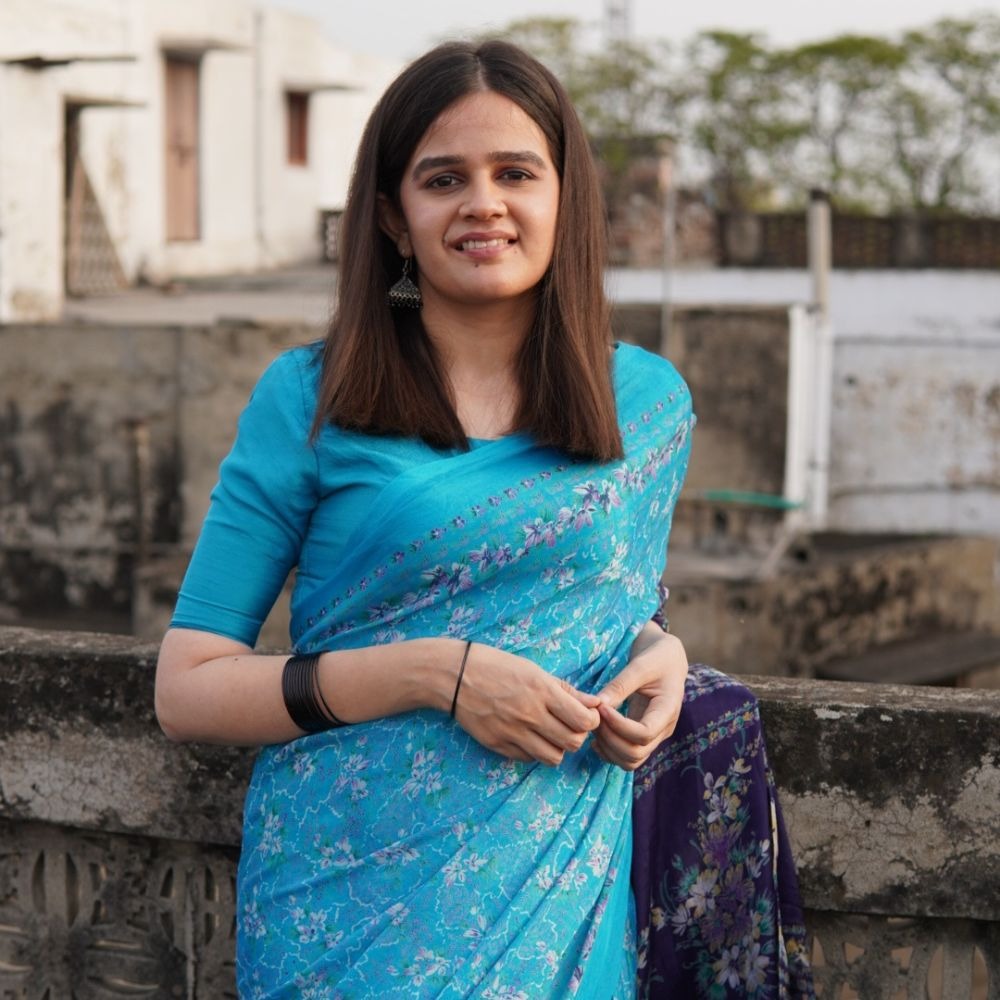
Nirmal Bano
Filmmaker & ScreenwriterDirector Bio
Nirmal is a Lahore-based filmmaker who began her career in 2017 as a sound designer on TV projects, including Aakhri Station (2018), which addressed taboo social issues. She later moved into screenwriting, contributing to Zindagi Tamasha (2019), an internationally acclaimed film that won at Busan despite censorship challenges and was Pakistan’s Oscar submission. Her second feature, Gunjal (2023), depicted the story of child labour activist Iqbal Masih and received critical acclaim. Since 2023, she has directed short films including The Mother, the Sons, and the Holy River, blending fiction, documentary, and folklore. She also teaches film studies at NCA.
The Fifth Season
About the Film
An exploration of the smog crisis in Lahore seen through the lens of politics, society, and science.
Where’s My Inhaler?
About the Film
A hybrid piece about Zayan's guilt of leaving his mother behind in smog-ridden Lahore as he spends time in the clear skies of Boston.
Chaal Khatha
About the Film
Chaal Khatha is a short thesis documentary directed as a final-year project at Beaconhouse National University, set in the rural outskirts of Multan. The film follows a local farmer navigating the aftermath of the 2022 floods, where his daily life has been reshaped by loss and disruption.
Through an observational approach, it documents his routine amid submerged fields and damaged surroundings, letting the environment and his own voice guide the story. The film offers a quiet, grounded look at survival and continuity in the face of climate disaster.
Zayan Agha
Filmmaker & DirectorDirector Bio
Raised in Lahore and now based in Boston, Zayan is a filmmaker whose work blends climate and social justice with narrative storytelling. An alum of the National College of Arts and Emerson College, his films have screened at leading international festivals, including the Austin Film Festival and Tasveer South Asian Film Festival. His work has been featured in CRACK Magazine and Forbes, with projects like The Round Lake exploring urgent issues such as water scarcity in Pakistan. Alongside film, Zayan has directed music videos for some of Pakistan’s leading artists and earning recognition for his visual storytelling.
A Cry From the Mountains
About the Film
As record heat swept across northern Pakistan last May, a glacial lake outburst flood surged from the Shisper Glacier, washing away entire villages in its path. In the high mountains above, Wakhi herders continued their seasonal migration, navigating a landscape that is changing faster than their traditions can adapt. Through the voices of both scientists and villagers, the film captures life on the frontlines of climate change.
Syed Hasnain Raza
Environmental Filmmaker & Founder, MPCENDirector Bio
Syed Hasnain Raza is an environmental filmmaker, educator, and founder of MPCEN (Media Project on Conservation, Environment, and Nature). With over a decade of experience, he has filmed across Pakistan, Malaysia, Singapore, Southeast Asia, Africa, Germany, and the UAE, capturing diverse ecosystems and human stories connected to nature.
His work focuses on climate justice, wildlife conservation, and human-nature relationships, exploring issues from coastal biodiversity along the Makran coast to urban pollution and energy transitions. His films have been recognized at international platforms and film festivals, with collaborations including WWF, ICFJ, and Terra Mater Studios. Through initiatives like The Climate Bulletin and Pakistan Wildlife and Eco Film Festival (PIWEFF), he amplifies underrepresented environmental voices and inspires action for a sustainable future.
Natari
About the Film
Natari (“anchor” in Sindhi) tells a story of survival and displacement in the endangered Indus Delta. On the sinking island of Kharo Chan, Ayoub Sehto, a fisherman, artist, and activist, and his family grapple with a vanishing way of life. With freshwater gone, fish stocks depleted by illegal bullho nets, and river flows choked by upstream damming, the community faces an impossible choice: remain anchored to their home or leave in search of survival.
Karim Shallwanee
Creative Director & Producer, Funkari FilmainDirector Bio
Hailing from Karachi, Pakistan, Karim is a creative director and producer at Funkari Filmain and an advisor at the Aga Khan Development Network. For the past few years him and his team have been documenting the impact of climate change in various parts of Central and South Asia, as well as the initiatives that are working on the grassroots to help vulnerable communities in the Himalayas, Hindukush, Karakoram, and Pamirs in their plight; and as a student of Muslim cultures and ethnomusicology, he aims to document the interplay between music and social change in diverse and transforming societies.
Champions of Climate Change
About the Film
Across coastlines, forests, and arid landscapes, this series follows four individuals confronting the realities of climate change in Pakistan. Whether retrieving deadly ghost nets from the ocean, designing homes for displaced communities, restoring endangered forests, or reviving ancient irrigation systems, each story is rooted in resilience, innovation, and hope. Together, these films paint a portrait of a country adapting, resisting, and reimagining its future.
Jawad Sharif
Filmmaker & National Geographic ExplorerDirector Bio
Jawad Sharif is an award-winning filmmaker and National Geographic Explorer from Pakistan, known for telling powerful stories on social change, human rights, and climate issues. His work focuses on marginalized communities and preserving Pakistan’s cultural identity through visual storytelling.
His films include Indus Blues, Natari, and The Color of Smog, with The Losing Side winning Best Human Rights Film at the Cannes World Film Festival. A TED Fellow (2022), Jawad is also the founder of Climate Kahani and Cinema for Change, using film to drive awareness and action around climate justice.